The City and the Township - Swakopmund
Part one
Part two
Labels:
About Namibia
0
comments

Background information
On May 14 the U.S. Postal Service eliminated International Surface Mail (M-Bag). This is the method used extensively by NPCA affiliate groups, returned Peace Corps volunteers and friends/family of currently serving Peace Corps volunteers in supporting grassroots efforts in many rural schools and communities in our countries of service.
USPS now offers airmail service only, which in most cases has tripled (or even quadrupled) the cost of shipping items overseas. This has shut down many projects not only with RPCVs but other non-profits, church groups and school groups.
Several groups (Friends of Malawi, African Library Project , One World Childrens Fund, among others) are compiling a list of non-profits and other groups who are protesting the elimination of International Surface Mail. This list will be sent to the Board of Governors of USPS as well as to Congressman Henry Waxman (D-CA), the Chairman of the House Committee on Oversight and Government Reform, which oversees USPS.
Take action now
An interesting Chicago Tribune article about the M-Bag
Labels:
About Namibia
0
comments
Here are links to photos I posted on another blog (more will be added periodically):
Travel to and arrival in Namibia
In Windhoek
Windhoek to Anker
Amy's house and Yard in Anker
Sketch of Amy's house
Around Anker
Amy's school and hostel
Anker People
Etosha National Park
Etosha: Okaukeujo to Halali
Etosha: Halali at night
Etosha: Halali in the morning
Etosha: Halali to Namutoni
Map: Etosha to Waterberg
Lake Otjikoto
Tsumeb
Otjiwarongo, Cheetah Conservation Project
Waterberg Plateau Park to Karibib
Swakopmund 1
Swakopmund 2
We returned from Namibia last Friday. After a weekend of unpacking, sleeping and talking to friends, it is great to have another day off before returning to work. Our trip went great. There were no major problems. The people we met were wonderful and Amy enjoyed introducing us to everyone. The highlights were:
--Travel- we survived the 24+ hours. Made every connection and all luggage arrived (with one brief delay). Got upgraded to a Toyota Avanza for free. All the school supplies fit in. I don't know what we would have done without the better car.
--Windhoek-As everyone seems to say, "Is this really Africa?. It is and it is a fun, vibrant city. We got to meet several PCV's on break and at work.
--Driving on the left with the steering on the right was different at first but I got used to it and going 150 (kph) on a completely straight road was fun.
--Amy's town of Anker - Sand, dust, dry-- but the people were so fun and friendly. Amy put on a braii and we got to help (okay. watch) them kill a sheep for us. Walking through the school and seeing the dedication of the teachers who get by on so little and yet want the best for the students was moving.
--Etosha - what can I say -- it lives up to all the hype. All the wonderful animals that became routine - springbok, zebra, kudu, elephant, giraffe everywhere. Among the many animals and birds that amazed us were lucky views of a leopard and Black Rhinos. The water hole at halali was outstanding.
--Tsumeb - what a suprisingly beautiful little town with flowers all over
--Waterberg- disappointing, but only because it was so cold that nothing was out during our early morning safari.
--Cheetahs - the cheetah conservation project in Otji was educational and worth the visit
--Swakopmund - another "Am I in Africa" moment. Two days to relax from our fast pace. The ocean, food and beach were great. I had my greatest "new bird" day ever. 20 new birds in one day (I am still compiling my notes from the trip and am at 88 new birds so far)
--5 hours on bumpy, desert and mountain roads to Sesriem, then 6 hours the next day on the same kind of roads to Windhoek. The worst roads I have ever driven. Felt that we would be returning the Avanza in a heap of rubble. Got one star crack on the windscreen.
--Sossusvlei - not enough time to see it, lots of walking, it was hot and we were tired. The place was massive and remote.
Finally, we had a great time with our daughter. We wore her out, I'm sure. Her pace of life is much different than ours. I am impressed with her commitment, her confidence and her communication skills. I could never do what she is doing and she is having fun at it. Her plan is to return to the US in December.
There, of course, was much more I could write about and maybe still will. Photos are possible too (We only have a thousand or so - no exaggeration!).
Labels:
About Namibia
0
comments
On Tuesday, August 14, we (my wife, I and one of Amy's best friends) will be flying from Minneapolis, Minnesota to visit Amy and to adventure through Namibia during her school break. This trip was originally planned for last December, but due to health reasons it was postponed. It almost didn't happen at all, but we are now on our way.
We will meet Amy in Windhoek on Thursday, August 16 and spend the next two weeks seeing some of the following places: Anker, Damaraland, Etosha, Waterberg, Twyfelfontein, Opuwo, Skeleton Coast, Cape Cross, Swakopmund, Sossusvlei and Windhoek. I doubt we will make it to all of those places and there will probably be some unscheduled places as well. We hope to meet some of the PCV's and others that Amy has worked and taught with.
As we travel, it will be doubtful that we will be able to update this blog, but when we return after August 31, we will have several posts and photos of our trip.
Labels:
About Namibia
1 comments
Labels:
About Namibia
0
comments
A short film produced to showcase Namibia as a safe and versatile location for filmmakers, with location shots and scenery shots.
Labels:
About Namibia
0
comments
Labels:
About Namibia,
Amy's travels
0
comments
NamiAlive - a promotional video for the HIV/AIDs album produced by Nam24 PCV's Amy and Dan
From the intro on YouTube:
In case you feel any need to see a commercial for the HIV/AIDS album made by Amy Taylor and Dan Cwirka in Namibia, here it is. Thank you very big to Jason Sears for getting this together.
Labels:
About Namibia
0
comments
Namibia is no longer number on on the Gini Coefficient list as this recent blog post from "Namibia Notes" reports:
Click here for old information about the Gini Coefficient on Wiki. The arrows at the top of each column enable you to sort each column. Click the "UN Gini index" Or the "CIA Gini index" twice to sort from worst to first.Namibia’s Gini Coefficient
Namibia has lost a world title, one that was good to loose. From 1994 through 2006, Namibia had the highest, at 0.7, Gini Coefficient in the world. This is a measure of income inequality in a society with 1.0 meaning that one person has all the wealth and everyone else has nothing. Conversely, 0.0 means that everyone has the same wealth. So, having a high Gini coefficient is bad. According to the recently released National Household Income and Expenditure Survey, our Gini Coefficient stands at 0.6. A 10 point reduction over ten years is good. But, before we get lost in self congratulation, let’s look at this accomplishment.
To start, the first measure took place in 1993/94, three years after Independence. The high level of inequality was expected. After all, we had just emerged from forty plus years of apartheid, and a century or so of colonial rule. Both systems (actually one could argue that apartheid was just colonialism taken to its extremes — though this discussion is for another time) had as a central tenet the creation of a large majority of poor ruled over by a tiny group of very rich. Under apartheid, skin color determined into which group one was placed. Three years is woefully insufficient to undo decades of inequality. Ten years, however, provides us with a reasonable benchmark. After all, as life teaches us, inheriting a bad situation is nothing to be ashamed of — it happens all the time. The important thing is what you do with that situation.
After a decade we have made progress on a number of fronts. Economic growth has been steady, more people are benefiting from that growth, levels of poverty have gone down. A relevant question at this time is, “Where do we stand now?” Namibia has passed Lesotho, Botswana, Sierra Leone and the Central African Republic. We are now in the neighborhood of Swaziland, Bolivia and Haiti. Our long term development outline, Vision 2030, clearly does not wish that we linger too long in this new place. The Vision sees us reaching status beyond the developing world with some very strict, some would say difficult, targets to reach in terms of education, employment and wealth creation. The next twenty-three years will see both progress towards and setbacks to achieving the Vision. For just as a Gini Coefficient can go down, it can also make the return trip back up. Clearly this is not a time to rest on our laurels.
Labels:
About Namibia
0
comments
The United States changed to daylight saving time (DST) three weeks ago on March 11th for our spring/summer/autumn months. However, very few countries during the southern hemisphere's summer months observe DST. In fact, Namibia is one of only three countries in Africa (the other two are Egypt and Tunis in the north) that observe it.
However, since they have just entered autumn, they are now actually going off DST. Just to make it confusing though, the Caprivi Strip (that part of Namibia that sticks way out on the northeast) unofficially does not observe DST at all and so will now be on the same time as the rest of the country.
So, while we "sprang forward" one hour, they "fall back" one hour. That means our time difference is now shorter than it has been. For us in Minnesota, we were 8 hours behind Namibia all winter, now we are only 6 hours behind them until September 2 when Namibia returns to DST.
So, what time is it in Namibia? Check the clock on the right.
See these links for more information on the confusing world of DST.
New Era newspaper article about DST
World map of daylight savings time
About Daylight Savings Time
Worldwide Daylight Savings Time
Interesting and confusing facts about DST, time and time zones
Funny post from a former PCV in Namibia. This comes from an email posted by Melanie, a returned PCV (Nam 24) who worked on the Angola border near Eehana:
Time change
I didn't not realize until someone pointed out to me…but Namibia observes Daylight Savings Time. So, as everyone back in the northern hemisphere experienced "spring forward" with time, we "fell backwards" today. It will be funny how many of the learners remember. I must chuckle actually, I tried to find a clock today just to see if anyone actually changed their clocks…couldn't find a single one. But, folks in the village agreed that everyone would change their clocks etc.
Well, that's more than I can say for a colleague of mine. This is probably the funniest story I've heard in a while. We were all hanging out during our week vacation and the topic of Daylight Savings Time came up. Cory piped up and told us about his experience in his village. Apparently during a staff meeting the topic came up and there was a bit of a discrepancy over whether or not they should change their clocks or not. Some of the teachers argued that the learners would just be late everyday if they changed their clocks.
Well, actually they would be an hour early since they were falling back an hour…but that is beside the point…or maybe adds to the humor of the whole thing. Anyway, the principle apparently believed in the spirit of democracy, and decided to put it to a vote. Do they or do they not change their clocks. Well, the vote was tied up 5 for the change and 5 against it. Who knew? So again, the principle being very efficient and democratic, decided to…COMPROMISE! Who woulda thought that something as binary as changing the clocks by 1 hour could be put to a compromise. So, his village has decided to change their clocks by ½ of an hour. The entire country of Namibia will begin school at 8:00…but Cory's village will have been in school for a half an hour already. It is just that crazy around here. It seems as though villages can just make their own rules…why not right?
Labels:
About Namibia,
Seasons and weather
0
comments
From Google Video: "Namibia 2007: an African Odyssey" (27 min).
The part about Damaraland (9:53-13:27) is near where Amy lives right now.
At 10:22 on the video the road sign says:
C 35 Kamanjab --->
<--- C 39 Khorixas Amy is about 50 km (30 mi) from that spot. If video doesn't work click here.
Labels:
About Namibia
0
comments
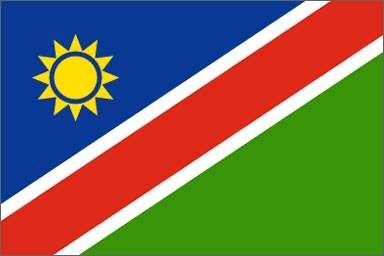
Articles on Namibian history of independence:
Namibian Independence
Namibia 1966-1990
Namibian History
Wikipedia - History of Namibia
The 26 newest nations of the World
Labels:
About Namibia
0
comments
The autumnal equinox
The same date (March 21 [March 20 in the USA]) and time (12:07 AM UTC, 2:07 AM Namibia [7:07 PM March 20 Central Daylight Time - see this web page about time zones and daylight savings time]) that spring begins in the northern hemisphere, fall begins in the southern hemisphere. That means that the days start getting shorter than the nights in Namibia.
Fall in Namibia (March 21 through June 21), generally means slightly lower average temperatures and much less rainfall. Though, like anywhere, daily temperatures and rainfall vary widely.
Since this past summer (the wet season) in Namibia was without much rain in so many places it is likely the drought will deepen and times will get even tougher for most people. See Amy's "Drought Prayer".
Namibian Climate
CLIMATE CHART FOR CENTRAL NAMIBIA

All areas of Namibia average more than 300 days of sunshine a year!
Labels:
About Namibia,
Seasons and weather
0
comments
Google Earth finally posted a high definition satellite photo of Anker. You can compare it to the hand drawn map Amy sent us to see some of the landmarks including: her house, the school and the hostel.
Use this link if you want to download Google Earth (it's free): Google Earth
Use this link to find it if you have Google Earth: Anker
For those who don't have Google Earth, you can link to this same spot on Google Maps by using this link: Anker


Labels:
About Namibia,
We write about Amy
0
comments
KhoeKhoegowab is the language that the people in the village of Anker speak. Although most of Amy's classes are taught in English, she has learned enough of it to understand some basics and is able to read it.
More about the Damara people group and the language they speak.
Want to learn some KhoeKhoegowab?
Here are some video lessons in the language:
KhoeKhoegowab Lesson No: 1
KhoeKhoegowab Lesson No: 2
KhoeKhoegowab Lesson No: 3
KhoeKhoegowab Lesson No: 4
Labels:
About Namibia
2
comments
Labels:
About Namibia
0
comments
The new school year begins this week in Namibia. It is mid summer there and some of the hottest days of the year, but the holidays end this week and the children begin to return to schools and hostels all around the country for another year. Teachers are supposed to report to work today and prepare for students, who are to report on Wednesday. Below is a schedule of the whole 2007 school year for Namibia.

Labels:
About Namibia,
Seasons and weather
0
comments
Namibia - This land is ours (PBS 19 min)
Postcard - Namibia (Elon University 4 min)
Animals in Namibia (Google 1 min)
Cruisin Namibia (Google 4 min)
Namibia - experience it yourself (Google 10 min)
(For more videos click on Google Video, Yahoo Video or You Tube)
Labels:
About Namibia
0
comments
Google Maps and Google Earth just did a big update of their satellite maps including many new high definition views in Namibia. In many spots you can zoom in to street and house level and see details (trees, cars, even people) that you could never see before.The following links are all in Google Maps but if you download the free version of Google Earth, you get even better views, angles and even 3-D panoramas.
For example, Amy's shopping and post office are in:
Kamanjab
(If you do not see detail, click the "satellite" button in the upper right corner of the map. Double click a spot or use the zoom bar on the left to get a closer view)
Unfortunately, the high definition satellite view ends about 8 miles east of Anker, where Amy lives.
(2/28/2007: updated high definition Google Maps now include Anker too)
Anker
Other towns are also now in high def. including the larger, nearby town of Otjiwarongo, where Amy has visited and shopped many times:
Otjiwarongo
Swakopmund, where Amy has spent a couple of vacations:
Swakopmund
The capital city and surroundings:
Windhoek
Where Jay and Shoni live:
Keetmanshoop
Where her good friend Elizabeth lives:
Gobabis
Dylan and Sandra's town:
Gibeon
Beth and Megan are in this town that had the bad floods in January:
Mariental
The town Amy did her orientation and where Caitlin and Wendy live:
Omaruru
The town Amy did her teacher training:
Karabib
Several volunteers live in or near:
Grootfontein
and:
Berseba
Many other towns and almost the whole coastline is in high definition. go exploring a bit on your own. Much of the USA is also now in good detail. Maybe you could find your own house
Labels:
About Namibia
0
comments